
Vikas Engine
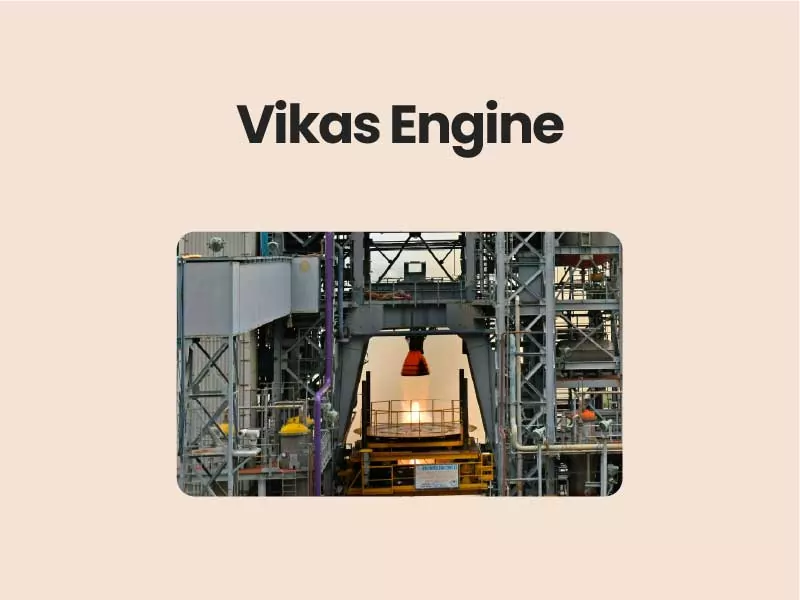
Vikas Engine The Indian Space Research Organisation (ISRO) recently conducted a successful qualification test of its High Thrust VIKAS Engine at the ISRO Propulsion Complex (IPRC) in Tamil Nadu’s Mahendragiri. The Vikas engine will power the ambitious Gaganyaan mission into space. It is a family of liquid fuelled rocket engines. It is used in the Polar Satellite Launch Vehicle (PSLV) and the Geosynchronous Satellite Launch Vehicle (GSLV) series of expendable launch vehicles for space launch use. With this launch, India will become the fourth nation in the world to launch a Human Spaceflight Mission after the USA, Russia and China. The objective of the Gaganyaan programme is to demonstrate the capability to send humans to low earth orbit on board an Indian launch vehicle and bring them back to earth safely.
Environment Management Plan for Najafgarh Jheel
Environment Management Plan for Najafgarh Jheel The National Green Tribunal (NGT) has directed Delhi and Haryana to enforce the Environment Management Plan (EMP) that the two governments have prepared for the rejuvenation and protection of the Najafgarh Jheel, a transboundary wetland. The implementation of these action plans is to be monitored by the National Wetland Authority through the respective State Wetland Authorities. Earlier, the Union Environment Ministry had set up a three-member committee to prepare an integrated EMP. The top priority would be to notify the Najafgarh jheel and its area of influence under The Wetlands (Conservation and Management) Rules, 2017. It lists immediate measures to be taken including demarcating the boundary of the wetland using geo-tagged pillars, and commissioning a hydrological assessment and species inventory. Medium-term measures to be implemented in two to three years include in-situ treatment of major drains meeting the Najafgarh jheel, regular monitoring of the waterbird population, and relocating flow obstructions such as power sub-stations. It also proposes a detailed estimation of sewage generation in the area considering 15 years of projected population, and identification of all drains contributing to pollution in the jheel. It is located in a natural depression in southwest Delhi, close to the Gurugram-Rajokri border on National Highway-48. The lake is largely filled with sewage from Gurugram and surrounding villages of Delhi. A portion of the lake falls in Haryana. The presence of 281 bird species, including several threatened ones such as Egyptian vulture, Sarus Crane, Steppe Eagle, Greater Spotted Eagle, Imperial Eagle and those migrating along the Central Asian Flyway has been reported at the lake. Read Also Deepor Beel Najafgarh Jheel The Najafgarh Jheel is a critical natural infrastructure for the region, buffering floods, treating wastewater, recharging groundwater (with high potential for water supply to significant population) and providing habitat to numerous plant, animal and bird species. It can regulate the microclimate by virtue of being a heat and carbon sink. In fact, if the EMPs are properly and fully implemented, the jheel can become central to the National Capital Region’s ability to mitigate the local effects of climate change.
Negative Ion Technology
Negative Ion Technology The Authority for Nuclear Safety and Radiation Protection (ANVS), Netherlands issued a statement identifying various negative ion wearable products containing more Radioactivity than legally permitted. Negative ion technology embeds negative ions in personal products and is currently being advertised as a means to maintain health, balance energy, and improve well-being. This technology is used in certain silicone wristbands, quantum or scalar-energy pendants, and kinesthesiology tape. The minerals that produce these negative ions often include naturally occurring radioactive substances such as uranium and thorium. It is believed that negative ions create positive vibes and uplift the mood. They show the various mental and physical health benefits, such as stress reduction, better sleeping, respiration etc. whereas these ions may also act on pollutants, make them negatively charged and get them collected on surfaces.
Lithium Mining
Lithium Mining The Serbia government has revoked the licenses for lithium mining to Rio Tinto, an Anglo-Australian multinational mining organisation, following protests for nearly two months. Serbians have been protesting against Rio Tinto’s plans to mine lithium in the Jadar valley near Lozinca town in the country. Rio Tinto had discovered lithium deposits in the country in 2006 and had bought land in the Lozinca area in Serbia the mine would have produced enough lithium to operate one million electric vehicles along with boric acid and sodium sulphate. While Rio Tinto has said to be fulfilling all Serbia’s and European Union’s environmental standards, protestors have been pointing out that lithium mining in the $2.4-billion project would irrevocably pollute the drinking water. Serbian capital Belgrade is surrounded by lignite mines and coal power plants powered by these mines, which only make the pollution worse. First traces of Lithium in India were discovered in Karnataka’s Mandya district recently. The preliminary find is relatively small: a mere 1,600 tonnes of lithium deposits. Chile, on the other hand, has an estimated reserves of 9.2 million tonnes. If oil powered the world in the 20th century, Lithium could play the same role in the 21st century. Naturally, even a small find commands great importance. Echoing a similar sentiment, the discovery is being given importance at the highest levels of government. This also shows the amount of effort and investment that lithium is likely to garner in the years ahead.
Central Asia Meet
Central Asia Meet This first India-Central Asia coincided with the 30th anniversary of establishment of diplomatic relations between India and Central Asian countries. The summit came two days after a similar China-Central Asia Conference was held where China offered USD 500 million in assistance and pledged to ramp up trade to USD 70 billion from the present levels of about USD 40 billion a year. Discussed the next steps in taking India-Central Asia relations to new heights. In a historic decision, the Leaders agreed to institutionalise the Summit mechanism by deciding to hold it every 2 years. They also agreed on regular meetings of Foreign Ministers, Trade Ministers, Culture Ministers and Secretaries of the Security Council to prepare the groundwork for the Summit meetings. An India-Central Asia Secretariat in New Delhi would be set up to support the new mechanism. The summit is symbolic of the importance attached by the leaders of India and the Central Asian countries to a comprehensive and enduring India-Central Asia partnership. It is being held at a critical juncture when tensions between the West and Russia and the United States (US) and China are rising. India too has faced geopolitical setbacks: Border tensions with China and the Taliban takeover of Afghanistan. It follows President Vladimir Putin’s visit to India, which may have allowed India to push Russia to moderately balance China in Eurasia and to contain the threats from Afghanistan. The recent unrest in Kazakhstan also showed that “new actors” are vying for influence in the region though their motives are still not clear. India has always maintained excellent diplomatic ties with all the five Central Asian states, Indian PMs including Prime Minister Narendra Modi in 2015, have visited them. Yet, India’s trade with them has been only at USD 1.4 billion in 2019. In 2017, India joined the Shanghai Cooperation Organisation (SCO) to engage with the region. But SCO is only a sluice gate to regulate the Russian and Chinese subliminal rivalry to prevent either power from dominating the region. The summit is a massive stride for India’s diplomacy. Since the region is a critical lynchpin to India’s security policy, the summit will have a waterfall impact to facilitate India’s multifaceted approach towards the region.
Scheme on Enhancement of Competitiveness in the Indian Capital Goods Sector- Phase-II
Scheme on Enhancement of Competitiveness in the Indian Capital Goods Sector- Phase-II The Ministry of Heavy Industries (MHI) has announced the Scheme on Enhancement of Competitiveness in the Indian Capital Goods Sector-Phase-II for providing assistance to the common Technology Development and Services Infrastructure. The goal of Phase II of the Scheme is to expand and enlarge the impact of the Phase I pilot scheme, thereby providing more impetus through the creation of a strong and globally competitive capital goods sector that contributes at least 25% to the manufacturing sector. In November 2014, the scheme on ‘Enhancement of Competitiveness in the Indian Capital Goods Sector was notified to encourage technology development and infrastructure creation. The scheme has budgetary support of Rs.975 crore and an industry contribution of Rs.232 crore. Technology Innovation Portals are used to identify technologies. The establishment of four new advanced centers of excellence, as well as the expansion of existing centers of excellence. Skill development in the capital goods sector–a creation of qualification packages for skill levels six and above. The establishment of 4Common Engineering Facility Centers (CEFCs) and the augmentation of existing CEFCs. Existing Testing and Certification Centers will be augmented. Ten Industry Accelerators for Technology Development will be set up. The sector does not require an industrial license. On the automatic route, FDI (Foreign Direct Investment) of up to 100 percent is permissible (through RBI). The amount of payment to the foreign collaborator for technology transfer, design and drawing, royalty, and so on has no limit. The maximum basic customs duty rate is often 7.5-10%. India has signed numerous FTAs (Free Trade Agreements) at lower duty rates. Lower duty rates are also possible through the Project Imports facility. Exports are encouraged by allowing duty-free imports of raw materials, consumables, components, and subassemblies through various DGFT (Directorate General of Foreign Trade) schemes administered by the Ministry of Commerce and Industry.
Kawal Tiger Reserve
Kawal Tiger Reserve Kawal Tiger Reserve is located at Adilabad district in Telangana state of India. The Government of India declared Kawal wildlife sanctuary as Tiger Reserve in 2012. The Kawal wildlife sanctuary was established in 1965 and later declared as the Protected Area (PA) in 1999 under the Wildlife Protection Act, 1972. Flora: Dry Deciduous Teak Forests mixed with Bamboo. Fauna: Mammal species that have been sighted include tiger, leopard, gaur, cheetal, sambar, nilgai, barking deer, chowsingha, sloth bear. The River Kadam (a tributary of Godavari) flows through this area. The area is increasingly getting threatened by growing human encroachments, rampant poaching, illegal wood felling and habitat loss.
Budget 2022-2023
Budget 2022-2023 There was a sharp increase in public investment and capital expenditure in Budget 2021-22. This Budget (2022-23) will benefit the youth, women, farmers, and the backward classes. The PM Gati Shakti master plan will guide the process. The country is expected to grow at 9.27 per cent. In a major push for digital currency, The digital rupee will be issued using blockchain technology by the RBI starting 2022-23. Income from the transfer of any virtual digital asset shall be taxed at the rate of 30 per cent, plus 1% tax on transaction. This Union Budget seeks to lay the foundation & give a blueprint of the economy over ‘Amrit Kal’ of next 25 years – from India at 75 to India at 100. The gross GST collections for the month of January 2022 are Rs 1,40,986 crore — the highest since the inception of the tax in 2017. Income from Long Term Capital Gains will be taxed at 15%. Corporate surcharge to be reduced from 12% to 7%. Rs 48,000 crores allocated for completion of construction of 80 lakh houses under PM Awas Yojana in rural and urban areas in the year 2022-23. Both Centre and States govt employees’ tax deduction limit to be increased from 10% to 14% to help the social security benefits of state government employees and bring them at par with the Central govt employees. Customs on polished diamonds, gemstones cut to 5%. Simply sawn diamonds will be exempted. To facilitate export of jewelry through e-commerce, simplified regulations will be in place by June this year. Coming to agriculture, procurement of wheat in Rabi season 2021-22 and the estimated procurement of paddy in Kharif season 2021-22 will cover 1,208 lakh metric tonnes of wheat and paddy from 163 lakh farmers & Rs 2.37 lakh crores will be the direct payment of MSP value to their accounts. Any cess or surcharge on income not allowed as business expenditure. Moving forward on this parallel track, we lay the following four priorities — PM Gati Shakti, inclusive development, productivity enhancement and investment, sunrise opportunities, energy transition and climate action and financing of investments. The Production Linked Incentive Scheme for achieving Atma Nirbhar Bharat has received an excellent response, with potential to create 60 lakh new jobs and additional production of 30 lakh crore during the next five years. A fund with blended capital raised under co-investment model facilitated through NABARD to finance start-ups in agriculture and rural enterprises for farm produce value chain will be set up. States will be encouraged to revise syllabus of agricultural universities to meet needs of natural, zero-budget and organic farming, modern-day agriculture. PM Modi’s development initiatives for the North East will be implemented by the North Eastern Council. This will enable livelihood activities for the youth and women. This scheme is not a substitute for the existing Centre or state schemes.
India – Japan Relation
India Japan Relation The friendship between India and Japan has a long history rooted in spiritual affinity and strong cultural and civilization ties dating back to the visit of Indian monk Bodhisena in 752 A.D. Throughout the various phases of history since contacts between India and Japan began some 1400 years ago, the two countries have never been adversaries Bilateral ties have been singularly free of any kind of dispute – ideological, cultural, or territorial. It is unique and one of warmth emanating from generous gestures and sentiments of standing by each other at times of need. India-Japan Relation – Background India and Japan established diplomatic relations in 1952. Japan was among the few countries that unconditionally bailed India out of the balance of payment crisis in 1991, which strengthened the relation between the two countries. A qualitative shift in India-Japan relations with the establishment of the ‘Global Partnership’ between the two sides in 2000 Further in 2006, both sides established ‘Strategic and Global Partnership’ in 2006. A Comprehensive Economic Partnership Agreement (CEPA) between Japan and India was concluded in 2011. In 2014, this bilateral relation was upgraded to ‘Special Strategic and Global Partnership’. Japan and India are partners in peace, with a common interest in and complementary responsibility for promoting the security, stability, and prosperity of Asia as well as in advancing international peace and equitable development. Since diplomatic relations between India and Japan were established in 1952, the two countries have enjoyed cordial relations based on trade and economic and technical cooperation. Areas of Cooperation Economic Cooperation – Japan is regarded as a key partner in India’s economic transformation. The Comprehensive Economic Partnership Agreement (CEPA) has helped in boosting bilateral trade. Japan has been one of the biggest sources of investment flows into India. A Currency Swap Agreement of $75 billion was signed recently. Developmental Assistance through Huge Infrastructure Projects – Japan has been a leading financial donor in the form of ODA (Official Development Assistance) to India. Japan supports India’s mega infrastructure projects like the Delhi-Mumbai Freight Corridor, Delhi-Mumbai Industrial Corridor, etc Japan has promised to undertake several projects in the North East region under North East Forum. Defence Cooperation – India and Japan are partners in the recently formed Quad Security Dialogue. India and Japan signed an “Acquisition and Cross-Servicing Agreement” that would allow the militaries of the two countries to exchange supplies and services on a reciprocal basis. Trilateral naval exercise called Exercise Malabar involving the United States, Japan and India is being carried on continuous basis. Strategic Interests – Looming presence of China has led to the convergence of economic and strategic imperatives, especially in the India-Pacific region Both countries share similar interest in Indo-Pacific and calls for a free, open, transparent, rule based and inclusive Indo pacific region. The Act East Forum, established in 2017, aims to provide a platform for India-Japan collaboration under the rubric of India’s “Act East Policy” and Japan’s “Free and Open Indo-Pacific Vision”. Global Partnership – both countries support each other at UNSC, Climate Change conferences, Disaster Risk management, SDG’s, etc Japan and India are working together to realize the reform of Security Council at the earliest. Technological Cooperation – “India-Japan Digital Partnership” (I-JDP) was launched in October 2018, focusing more on Digital ICT Technologies. establishment of three India-Japan Joint Laboratories in the area of ICT (AI, IoT and Big Data). Space Cooperation – India and Japan conducted their first Annual Bilateral Space Dialogue, for enhancing bilateral cooperation in outer-space. Agreement on technological collaboration between their respective agencies in the Joint Lunar Polar Exploration Mission. Asia-Africa Growth Corridor (AAGC) – an economic cooperation agreement envisaging a closer engagement between Asia and Africa for “Sustainable and Innovative development”. Twinning Program – As of now 7 Indian states and 3 sister cities/regions have partnered with Japanese prefectures and cities through MoUs to cooperate under diverse sectors. Weaknesses in India-Japan Relation Low Trade Volume – In spite of CEPA, India Japan trade it has not produced the anticipated results. Bilateral trade has steadily declined since 2013. Moreover, India has a high Trade Deficit with Japan. Diverging interests – with respect to economic issues like on E-commerce rules (Osaka track), Regional Comprehensive Economic Partnership, etc. Limited Defence Cooperation – There is hardly any exchange or procurement of defense equipment or technology from Japan Chinese dominance – Despite converging interests of Japan and India, trade with China represents more than 20% of Japan’s total trade. Both countries do not have a specific China policy. India-Japan trade languishes at around $15 billion, a quarter of trade with China while Japan-China trade is around $300 billion. Lack of concrete actions – on projects like Asia Africa Growth Corridor, despite it being signed in 2017. There is a great deal of scepticism on the feasibility of the AAGC itself as well as the nature of the projects embedded in it. Other Barriers – India struggling to penetrate the Japanese market because of language barriers, high quality, and service standards. Way Forward Expediating Economic Convergence – Japan is only India’s 12th largest trading partner, and trade volumes between the two stands at just a fifth of the value of India-China bilateral trade. Expanding Cooperation – India and Japan need to expand cooperation in sectors such as Cybersecurity and Emerging technologies. Issues of India’s insistence on data localisation and reluctance to accede to global cybersecurity agreements such as the Budapest Convention needs to be discussed. Strengthening defence ties – There should be more exchange of defence equipment and technologies. Cooperation on defence equipment and technology holds immense scope and potential for strengthening technological capability and industrial infrastructure through joint efforts between the public and private sectors. Expedite implementation of AAGC project – India needs to change its style of implementing projects abroad, most of which have been plagued by cost and time over-runs. Enhancing communication and connectivity for unimpeded trade and flow of people, technology, and ideas for shared prosperity. Providing more business-friendly environment – as Japan’s interest in India is increasing due to a variety of reasons including India’s large and growing market and its resources, especially the human resources. Today, India is the largest democracy in Asia and Japan the most prosperous. The evolving geopolitical situation, with the focus shifting decisively towards the Indo-Pacific region and a deeper understanding of the complementarities between
The Pradhan Mantri Matru Vandana Yojana (PMMVY)
The Pradhan Mantri Matru Vandana Yojana (PMMVY) The Pradhan Mantri Matru Vandana Yojana (PMMVY) is a maternity benefit programme that was rolled out by the Government of India in 2017. Under PMMVY, a cash incentive of Rs. 5000 is provided directly to the Bank / Post Office Account of Pregnant Women and Lactating Mothers for first living child of the family subject to fulfilling specific conditions relating to Maternal and Child Health. The cash incentive will be provided in three instalments It is aimed at improving health-seeking behaviour and to compensate for wage loss for pregnant women, particularly in the unorganised sectors. PMMVY is implemented using the platform of Anganwadi Services scheme of Umbrella ICDS under Ministry of Women and Child Development. The enrolment and disbursements under the scheme have witnessed a downward fall in the last two years as per the data of the Ministry of Women and Child Development. Read Also Pradhan Mantri Matsya Sampada Yojana(PMMSY)